

Boulder Branding Explained: What Works and What Doesn't
TL;DR: Branding in Boulder is more than a logo refresh—it's the foundation that determines how your business is perceived, what you can charge, and which clients you attract. This guide breaks down what professional branding actually includes, how much it costs for a Boulder company in 2026, and why visual identity matters more in this specific market than most business owners realize.
A Boulder business owner who wants to "work on their brand" usually encounters one of two responses: a graphic designer who offers a logo package for $1,500, or a brand agency that wants $80,000 for a full rebrand. Neither feels right, and the gap between them is confusing. What exactly is branding supposed to do for a business, and how much should it cost for a company operating in Boulder's specific market environment?
Boulder is an unusual market. It's a city of about 100,000 residents with a disproportionately high concentration of educated consumers, outdoor industry businesses, tech companies, professional services firms, and health and wellness brands. Buyers here are sophisticated, values-driven, and quick to recognize when something feels inauthentic. Branding in Boulder in 2026 has to do more than look good on a business card—it has to communicate genuine character, build immediate trust, and position a business accurately against alternatives that are often also well-branded. The bar here is higher than in most Colorado cities, including Fort Collins, Loveland, and even large swaths of Denver.
What Branding in Boulder Actually Means for a Local Business
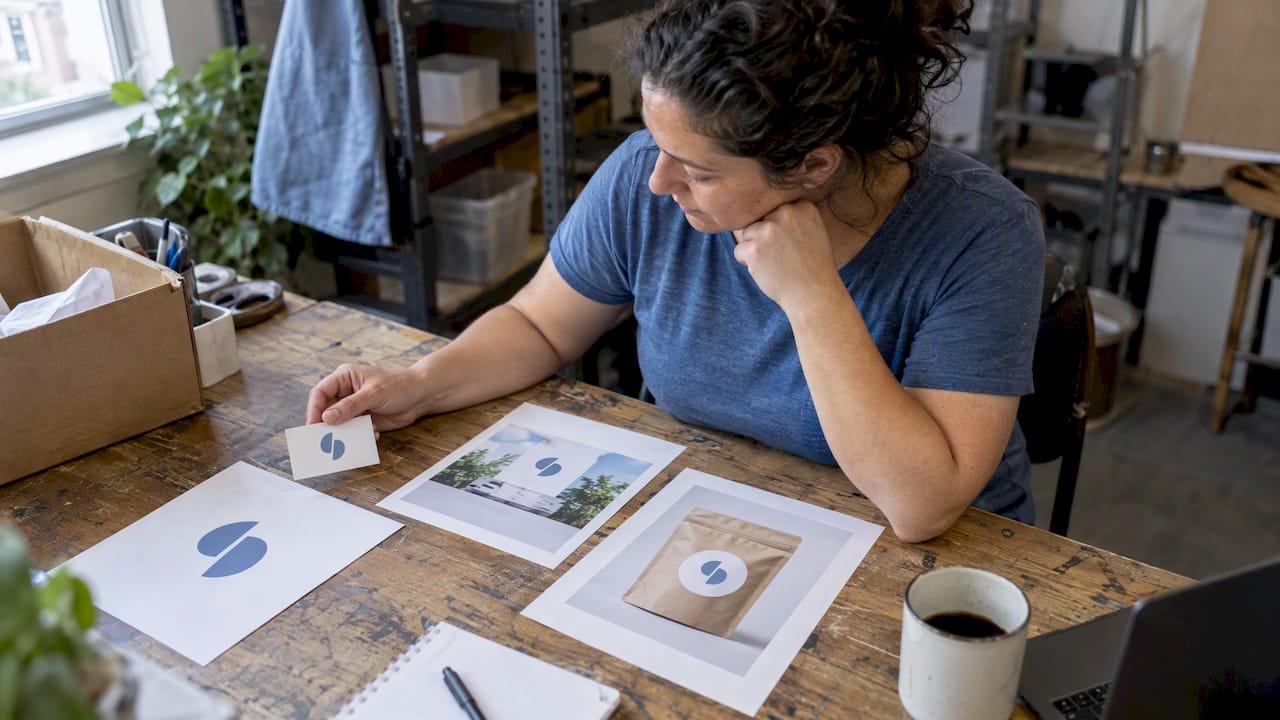
Branding in Boulder is the process of defining a business's identity—its positioning, personality, visual language, and voice—in a way that creates a consistent, memorable impression across every customer touchpoint. That includes the visual elements most people associate with branding (logo, color palette, typography, imagery style) and the strategic layer that most people underestimate: what your business stands for, who it's for, how it communicates, and what makes it meaningfully different from competitors.
The distinction between a brand and a logo is foundational. A logo is a visual mark—it identifies a business. A brand is the sum of every impression a business creates: the quality of the experience, the way communications feel, the associations customers build over time. Apple's logo is a piece of fruit. Apple's brand is precision, aspiration, and belonging to a particular tribe of users. The logo didn't create that brand—every product, every store, every customer interaction did.
For Boulder businesses, the brand strategy layer is particularly important because the market is values-conscious. A Boulder outdoor apparel company that positions itself as environmentally committed needs to mean it—in its materials sourcing, its packaging, its messaging, and its company culture. Customers in this market identify greenwashing quickly and punish it. A credible brand is one where the strategy, the visuals, and the actual business behavior are aligned.
How Much Does Professional Branding Cost for a Boulder Company in 2026?
Branding investment for Boulder businesses spans a wide range based on scope and strategic depth. Here's a realistic breakdown:
- Logo and basic identity package (logo, colors, fonts, simple guidelines): $2,000–$6,000
- Brand identity system (full visual identity + brand guidelines document): $8,000–$20,000
- Strategic brand development (positioning, voice, messaging + visual identity): $20,000–$50,000
- Full rebrand for established businesses (strategy, identity, rollout across touchpoints): $40,000–$100,000+
The price difference between a $3,000 logo package and a $25,000 brand development engagement isn't primarily about designer quality—it's about the depth of the work. A logo package delivers a visual mark. A brand development engagement delivers positioning strategy, competitive differentiation, a messaging framework, a visual system that works across print and digital, and guidelines that allow your team to execute consistently over time without requiring a designer for every application.
For most Boulder small and mid-size businesses, the right starting investment is a brand identity system in the $10,000–$20,000 range: clear positioning, a complete visual identity, and guidelines robust enough to support consistent execution across your website, marketing materials, and physical presence. That foundation can be built upon without requiring a full strategic rebrand every few years.
When Full Strategic Branding Is Worth the Investment
Full strategic branding—positioning research, competitive analysis, brand architecture, messaging strategy plus visual identity—is worth the investment when: a business is launching into a competitive market and needs differentiated positioning from day one; an existing business has grown but the original identity no longer reflects what it's become; a company is preparing for a fundraise or significant business development activity where brand credibility matters to external audiences; or a business is expanding into new markets like Denver, Longmont, or beyond Colorado where its local reputation doesn't precede it.
Why Boulder's Market Makes Visual Identity More Important Than Most Cities
Boulder businesses operate in an aesthetically sophisticated environment. The concentration of outdoor brands, design-conscious tech companies, and health and wellness businesses that have made visual identity a central part of their market position means the baseline expectation for brand quality is higher here than in most comparably sized cities. A mediocre visual identity that might pass unremarked in a less design-literate market stands out as amateurish in Boulder.
The outdoor industry's influence is significant. Companies with roots in Boulder's outdoor economy have established a visual vocabulary—clean, performance-oriented, nature-influenced, premium—that defines what high-quality branding looks and feels like in this market. Businesses operating adjacent to this ecosystem, even in unrelated industries, are implicitly compared against it.
Boulder's tech and professional services sectors add another dimension. Venture-backed startups and established software companies invest heavily in brand identity because they understand the role it plays in recruiting, fundraising, and market credibility. A professional services firm in Boulder competing for clients who work with these companies needs to meet the same visual and communication standards or risk appearing like a second-tier option by comparison.
The Difference Between a Brand and a Logo That Business Owners Keep Getting Wrong
The most common mistake Boulder business owners make with branding is treating a logo project as equivalent to a brand project. They get a new logo, update their website header, order new business cards, and feel like the branding work is done. A year later, nothing has changed—they're not attracting better clients, they're not able to charge more, and their marketing materials still feel inconsistent because nobody defined the brand system that was supposed to govern all of it.
A functioning brand system answers questions that a logo alone cannot. What words do we use and which do we avoid? What does our voice sound like in formal communications versus casual social media? What kind of photography represents us—lifestyle, technical, human-centered? How do we describe what we do in one sentence versus one paragraph? What are the boundaries of what we are and aren't? These questions have to be answered strategically before visual design can translate them into something consistent and compelling.
For Boulder businesses, brand voice is often the most underdeveloped element. The visual identity gets attention and investment. The strategic messaging—how you talk about what you do, what makes you different, what your company actually believes—often gets written by whoever is available rather than developed intentionally. That gap shows up in websites that don't convert, marketing materials that feel generic despite expensive design, and sales conversations where the company's differentiation isn't clear even to the people making the pitch.
How Long Does a Full Brand Build Take and What Should It Include?
A complete brand development project for a Boulder business typically takes eight to fourteen weeks from kickoff to final delivery, depending on scope and the number of decision-makers involved. Here's what a well-structured engagement includes.
Discovery and research (weeks 1–2). Stakeholder interviews, competitor audit, audience research, and identification of the positioning white space your business can credibly own. This phase defines what the brand needs to accomplish strategically before any visual work begins.
Strategy development (weeks 2–4). Brand positioning statement, value proposition, personality attributes, messaging architecture, and voice guidelines. This is the intellectual foundation the visual identity is built on. Skipping this phase and going straight to visual design produces logos that look good but don't communicate anything specific.
Visual identity design (weeks 4–10). Logo system (primary logo, variations, icon), color palette, typography selection, imagery guidelines, and examples of how the identity applies across key touchpoints. Typically includes two to three design directions at the concept phase, with one developed into the full system after selection.
Brand guidelines delivery (weeks 10–14). A comprehensive guidelines document covering every element of the brand system and how to apply it consistently. This is what ensures your team, your web developer, your printer, and any future agencies all execute the brand with consistency across every channel.
Common Questions
How does branding affect what a Boulder business can charge?
Brand perception directly affects price tolerance. Buyers use visual and communication quality as a proxy for service quality, especially before they've experienced the service firsthand. A Boulder professional services firm with a premium, polished brand identity can typically charge 20–40% more than a competitor offering similar services with a generic or outdated brand, because the first impression sets an expectation of quality. This is particularly pronounced in Boulder's market, where buyers are accustomed to interacting with high-quality brands and apply the same standard to every business they consider. Rebranding at a higher quality level is often one of the fastest paths to raising prices without changing the underlying service offering.
How do I know when my Boulder business is ready to invest in branding?
A Boulder business is ready for serious branding investment when: your visual identity no longer reflects the quality or scale of what you actually offer; you're losing prospects to competitors whose work you know is no better than yours but who present more professionally; you're expanding into new markets where your local reputation doesn't precede you; or your team is growing and you need consistent brand guidelines so marketing execution doesn't require constant design intervention. Early-stage businesses often underprioritize branding to conserve resources, but businesses past the survival stage that want to grow should treat brand investment as infrastructure, not a luxury.
What is the ROI of a branding investment for a Boulder company?
Measuring brand ROI directly is difficult because brand affects multiple revenue levers simultaneously: it influences how many prospects convert, what price the market accepts, how often clients refer others, and how strong recruiting is over time. The most concrete proxy metrics are conversion rate improvement after rebrand, average sale size before and after, and qualitative feedback from prospective clients about why they chose you. Boulder businesses that have documented their rebrand outcomes typically report 15–35% improvement in website conversion rates and the ability to increase prices 10–30% within 12–18 months of implementing a stronger brand identity.
If you're ready to invest in a brand that positions your Boulder business to compete at a higher level, contact PHENYX to start the conversation. PHENYX works with businesses across Boulder, Denver, and throughout Colorado to build brand identities that attract better clients and support sustainable growth. See our branding services to get a sense of what we build.