


Why Your Google Rankings Look Different Than What Your Competitors See
TL;DR
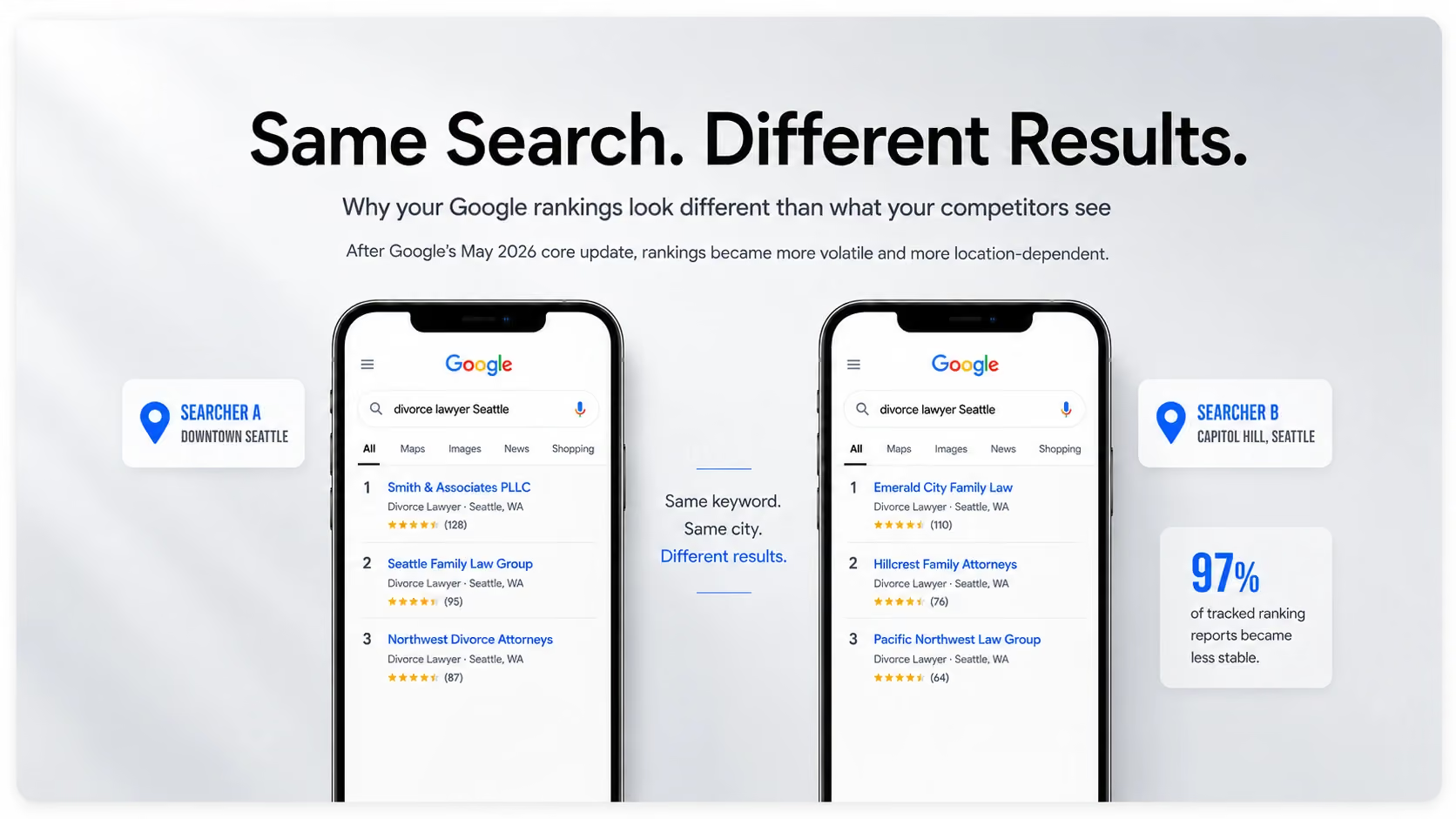
Google's May 2026 core update made organic rankings far more volatile. Research analyzing over 8 million search results found that 97% of ranking reports became less stable, meaning two people searching the same keyword from different locations can now see completely different results. A single rank check no longer tells you the truth about your SEO. You need pattern data across many searches to know who's actually winning.
What Google's May 2026 core update changed
Google rolled out a core algorithm update the week of May 18, 2026. Research firm Yext analyzed more than 8.16 million search results before and after the rollout and found a clear shift: organic rankings became significantly more volatile, with 97% of tracked ranking reports showing increased instability.
The volatility hit mobile organic search the hardest, especially for location-based searches. That's notable because local SEO practitioners already expect the local pack (the map-based results) to vary by searcher location. What changed here is that regular organic results, the ones most rank tracking tools treat as a fixed, universal list, started behaving the same way.
Why two searchers can see two different results for the same keyword
Before this update, two people a few blocks apart searching the same term, like "divorce lawyer Seattle," would generally see similar organic results. After the update, that assumption broke. The same query can now return meaningfully different result pages depending on the searcher's exact location, even within the same city.
One data point makes this concrete: a business tracked in the Phoenix market used to show a predictable ranking pattern across the metro. Rankings dropped off in a logical way as you moved outside the city core. After the May update, that pattern disintegrated. The business ranked well in one area, dropped in a nearby area, then jumped back in a third, with no clean geographic logic connecting the results. As of August 2026, that instability hasn't settled down.
Is SEO dead?
No. SEO is not dead. Clear winners and losers still exist in the search results, and businesses that consistently dominate their category still show up more often than competitors. What changed is how much data you need to see that pattern. A single search now shows you one snapshot from one location at one moment. It's no longer a reliable stand-in for what most searchers actually see.
The single-search fallacy
At PHENYX, we call this the single-search fallacy: the assumption that one ranking check represents the full truth about your visibility. Before May 2026, that assumption was already shaky. Now it's actively misleading. Judging an entire SEO campaign off one self-search is like judging a year's weather off one glance out the window this morning. You need volume before you can see the pattern.
The fix isn't to stop tracking rankings. It's to stop trusting any single check. Aggregate hundreds or thousands of scans across locations and devices, and the noise cancels out. What's left is a real picture: which businesses show up consistently, which ones occasionally get lucky, and which ones have real work to do.
How to measure SEO after this update
Stop asking "what position do I rank for this keyword?" That question assumes a single, universal answer exists. It doesn't anymore. Ask these instead:
- How often do I show up across many searches for this term, not just one?
- How often do I outrank my specific competitors across those searches?
- Is that visibility translating into calls, leads, and revenue, not just impressions?
Rankings measure visibility. They don't measure whether that visibility is converting. Pair ranking data with call tracking and UTM-tagged Google Business Profile links so you can connect a ranking pattern to an actual business outcome, not just a number on a report. This is the same reason we push clients to measure paid campaigns by conversion rate, not just clicks. Visibility and revenue are two different numbers, and only one of them pays the bills.
Why this is hard to track on your own
Most business owners don't have time to run hundreds of scans across locations every time Google ships an update. That's the real problem with volatility like this: catching it requires ongoing, structured monitoring, not an occasional self-search when things feel off.
An update like May 2026 doesn't announce itself. Nobody gets a notice that says "your rankings are about to become location-dependent." The businesses that noticed early were the ones already watching their data closely enough to see the pattern shift, and even they needed thousands of data points before they could say anything for certain.
This is the case for having a marketing team watching this for you instead of checking it yourself once in a while. A single business owner glancing at their own search results has no way to tell a real ranking drop from normal post-update noise. An agency tracking dozens of clients across markets sees the pattern the moment it starts, because they're comparing notes across a much bigger dataset than any one business generates on its own.
At PHENYX, this is built into how we run SEO & AEO for clients on MODS: ongoing tracking and quarterly progress reviews, so shifts like this get caught and explained instead of discovered by accident three months later when leads start drying up.
Key takeaways
| What changed | What it means for you |
|---|---|
| 97% of tracked ranking reports became more volatile after May 2026 | A single rank check is now even less reliable than before |
| Two nearby searchers can see different organic results for the same keyword | "I rank #3" is no longer a complete answer without saying #3 for whom, where |
| Mobile, location-based organic search saw the biggest shift | Local and multi-location businesses are most affected |
| SEO still has clear winners and losers | Aggregated data across many searches reveals the real pattern |
| Rankings measure visibility, not revenue | Pair rank tracking with call tracking and UTM data to see what's actually working |
FAQ
What was Google's May 2026 core update?
It was a core algorithm update Google rolled out the week of May 18, 2026, that significantly increased how much organic search rankings vary by searcher location, even for the same keyword.
Why do I see a different Google ranking than my customers do?
Since the May 2026 update, Google serves more location-sensitive organic results than before. Two searchers in different parts of the same city can see different result pages for an identical search term.
Is rank tracking still useful after this update?
Yes, but only when it's based on many searches across locations rather than a single check. One search now shows a snapshot, not a reliable ranking.
Does this mean SEO no longer works?
No. Businesses that consistently win in search still show up more often than their competitors. The update changed how much data you need to see that pattern clearly, not whether the pattern exists.
How should I measure SEO success now?
Track how often you appear and outrank competitors across many searches, then connect that visibility to real outcomes like calls and leads using call tracking and UTM parameters, rather than relying on a single rank number.
Ranking volatility like this is exactly why PHENYX builds SEO & AEO strategy around visibility patterns and revenue outcomes, not single-search snapshots. If your rank tracker and your real-world results are telling two different stories, get in touch and we'll walk through what's actually happening in your market.

