


ChatGPT and AI Overviews: Marketers, Check Access First
To get cited by ChatGPT and Google AI Overviews, make sure your site is indexable by AI crawlers, rewrite pages into atomic BLUF sections that can be extracted as stand-alone answers, and build corroborating mentions on authoritative third-party sites. Run two checks today: your robots.txt file and your indexing status in Google and Bing. Expect results to build over weeks to months.
TL;DR:
- Confirm that Google and Bing index priority pages, submit sitemaps, add the site to Bing Webmaster Tools, and check server logs for blocked crawler requests.
- Rewrite key pages with self contained answers of roughly 30 to 60 words at major section openings, then add FAQPage and Article schema, plus HowTo schema for instructions.
- Earn corroborating mentions through respected industry publications, rating directories, or guest posts, prioritizing the domains AI engines already cite for your target prompts.
- Track visibility with Search Console’s generative AI report, Bing Webmaster Tools signals, and analytics filtered for ChatGPT referral traffic; start with pages that already rank.
Table of Contents
- Quick summary: what to do first
- How do AI Overviews and ChatGPT search choose what to cite?
- What technical checks make your pages eligible?
- How do you write content that AI can extract and cite?
- Which off-site signals raise your odds of being cited?
- How do you measure AI visibility?
- What can you do this week?
- Why eligibility and measurement come before authority
- How we help you get cited in AI answers
- FAQ
- Sources
Quick summary: what to do first
- Allow OAI-SearchBot in robots.txt and confirm successful crawls in your server logs.
- Verify your site is indexed in Google and Bing, submit sitemaps, and add the property to Bing Webmaster Tools.
- Rewrite key pages with BLUF-first H2 and H3 sections, then add FAQPage and Article schema.
- Earn one authoritative mention or directory listing, and pitch a guest post.
- Enable and monitor the Generative AI performance report in Google Search Console.
- Tag ChatGPT referral traffic in your analytics so you can see what is working.
How do AI Overviews and ChatGPT search choose what to cite?
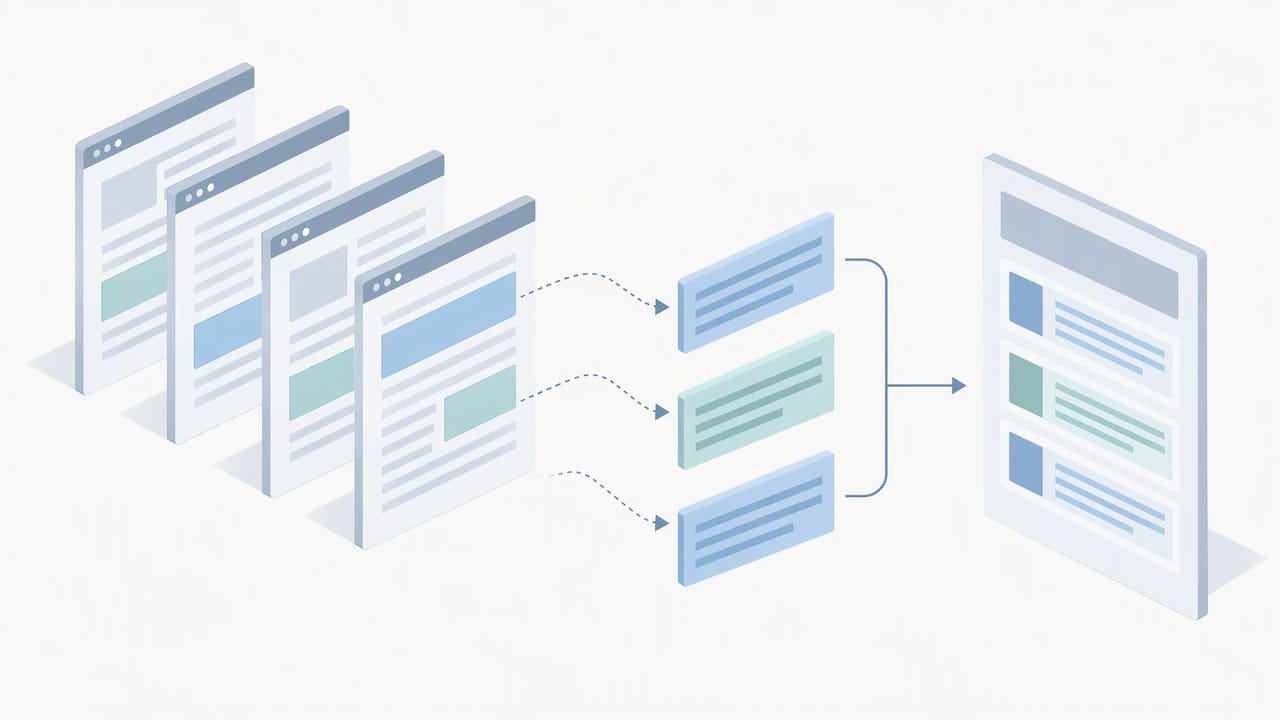
AI Overviews synthesize information across several pages and usually cite more than one supporting source, unlike a classic featured snippet that credits a single page. Google’s own guidance says no special LLM-specific files are needed. Eligibility lines up with normal indexed, snippet-eligible pages, and Google advises foundational SEO and people-first content.
ChatGPT search leans on web indexes such as Bing, while platforms like Perplexity emphasize explicit citations and freshness. The practical takeaway is that these systems retrieve passages, not whole pages. A tight, self-contained paragraph beats a long, wandering one, because it can be lifted out and still make sense. Write every section as if it might be read alone.
What technical checks make your pages eligible?
Start with access, because no amount of good writing helps a page the crawler cannot reach.
- Confirm your pages are indexed in Google and Bing, then submit your sitemaps and verify both properties.
- Allow OAI-SearchBot in robots.txt. OpenAI states that sites opting out of this crawler will not be surfaced in ChatGPT search answers.
- Watch your server logs for OAI-SearchBot requests and investigate failed responses, including 403 errors.
- Check your WAF and CDN rules (Cloudflare, Akamai) and allowlist crawler traffic if automated agents are being blocked.
- In Google Search Console, review the Search generative AI control, which lets you include or exclude your site’s content from generative features, and open the Generative AI performance report.
- Add your site to Bing Webmaster Tools. Importing from Google Search Console speeds up verification and helps ChatGPT search discover your pages.
Pro Tip: Many sites block AI search by accident through a blanket robots.txt rule or an aggressive firewall setting. Test with a real crawler request before assuming your configuration is fine.
How do you write content that AI can extract and cite?
Think in atomic sections. Open every major H2 or H3 with a direct answer of roughly 30 to 60 words that makes sense with no surrounding context. Follow it with brief evidence and a short example. Similarweb’s guidance on AI search optimization notes that extraction works best when each section is independently citable and BLUF-first.
- Lead with the answer, then support it.
- Avoid pronouns like “this” or “it” that depend on a previous paragraph.
- Name the subject in full, so a pulled passage still identifies what it describes.
- Add FAQPage and Article schema, and use HowTo schema for step-by-step pages.
- Swap vague claims for verifiable statements with a number, a timeframe and a source.
Similarweb defines GEO as structuring content and building brand authority so AI platforms select and cite your brand. That pairing of structure and authority is the heart of this article: formatting alone will not earn citations.
Which off-site signals raise your odds of being cited?
AI systems favor facts that several independent sources agree on. If only your own site says something, it is a weaker citation candidate than a claim repeated on reputable third-party pages.
- Seek placements on high-authority industry publications and respected rating directories.
- Contribute factual, attributable content to platforms models commonly draw on, such as YouTube, Reddit, LinkedIn, G2 and Quora. Skip promotional chatter.
- Pitch guest posts, data-driven articles or original frameworks to publications that already show up in AI citations for your topic.
- Run your target prompts through AI engines, note which domains get cited, and prioritize outreach to those sources. That is your authority gap.
Complete, consistent business profiles matter here too. Our Google Business Profile checklist covers one of the most common corroborating sources. For a tool-assisted angle, this partner article on optimizing for ChatGPT is a useful read.
How do you measure AI visibility?
You cannot improve what you cannot see, so set up measurement before you start rewriting.
- Use the Generative AI performance report in Search Console to see which pages contribute to AI Overview impressions.
- Check Bing Webmaster Tools for AI-related signals, including citation metrics where they are available.
- Filter your analytics for utm_source=chatgpt.com, which ChatGPT adds to its referral links, to isolate direct traffic from ChatGPT search.
- Compare the domains AI engines cite for your target prompts against your own footprint, then focus outreach there.
What can you do this week?
Work through these in order. Each step builds on the one before it.
- Verify indexing in Google and Bing, submit your sitemap, and import into Bing Webmaster Tools.
- Check robots.txt for OAI-SearchBot and other AI crawler rules, then monitor your logs.
- Fix any WAF or CDN rules returning 403 errors to known crawler user agents.
- Rewrite two high-value pages with BLUF-first H2s and add FAQPage and Article schema.
- Pursue one authoritative directory listing or guest post aimed at sites AI already cites.
- Enable the generative AI controls and begin tracking the Generative AI performance report.
- Add UTM filtering for ChatGPT referrals and watch your analytics.
- Repeat and expand based on where AI currently cites other sources.
Pro Tip: Start with pages that already rank. Small structural edits to a page with existing visibility usually buy the most citation chance for the least effort.
For a deeper walkthrough, see our practical GEO playbook and our look at recovering clicks lost to AI Overviews.
Why eligibility and measurement come before authority
We treat AI citation work as part of a regular SEO and AEO roadmap, not a separate stunt. Technical checks and measurement come first, because they tell you whether anything you change is working. Then we focus on pages that already perform, since small structural edits there pay off fastest. Authority is cumulative, so we track progress in Search Console and Bing and keep iterating.
— PHENYX
How we help you get cited in AI answers
If you would rather hand off the technical and outreach work, our team can take it on. We start with a diagnostic audit, then fix what it finds and keep the work moving.
- Crawler access and indexing review, including robots.txt, WAF rules, Search Console and Bing setup
- Content restructuring into BLUF-first sections with the right schema
- Authority-gap analysis and digital PR to earn corroborating mentions
- Ongoing support through our MODS subscription, from $4000 per month
Our SEO & AEO services map directly to the steps above. Reach out and we will walk through your site’s current eligibility and the fastest path to being cited.
FAQ
Why am I not seeing AI Overviews?
AI Overviews do not appear for every query, and Google decides when to show them. Your pages also need to be indexed and snippet-eligible, which Google’s AI features guidance ties to standard search eligibility.
How do I appear in an AI Overview?
Make sure your page is indexed and eligible for snippets, then write clear, people-first sections that answer a question directly. Google says no special files or markup are required beyond foundational SEO.
How do I show up in ChatGPT searches?
Allow OAI-SearchBot in robots.txt and make sure your pages are indexed in Bing. Then structure content as stand-alone BLUF answers and earn mentions on trusted third-party sites.
Can you trick the AI Overview?
There is no reliable shortcut. These systems favor content that is accessible, clearly structured and corroborated by other sources, so the dependable route is eligibility plus authority built over time.
Sources
- Developers
- Overview of OpenAI Crawlers
- Generative AI performance report (Search) - Search Console Help
- Generative Engine Optimization: The Complete 2026 Guide | Similarweb

