

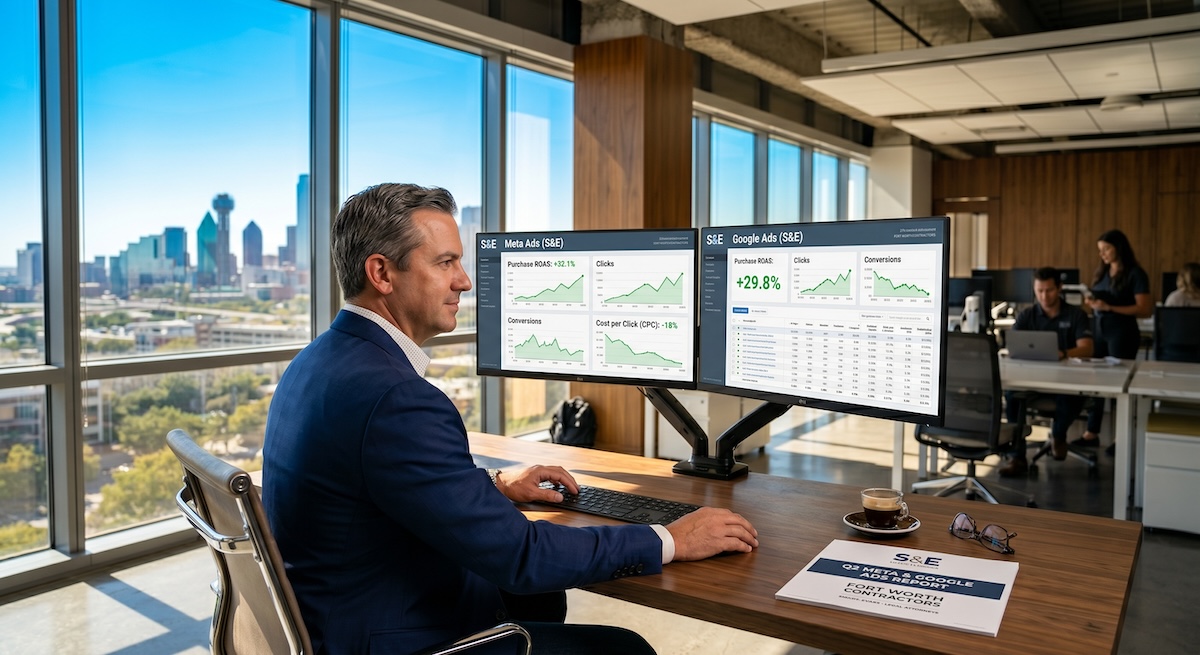
Fort Worth businesses are seeing measurable ROI from paid ads because local competition is lower than Dallas, costs are falling, and targeted PPC campaigns now reach hyper-local audiences. Companies investing now gain a 6–12 month competitive advantage before the market saturates.
Fort Worth business owners face a brutal choice: rely on organic reach alone and watch competitors steal market share, or invest in paid advertising and watch budgets evaporate with no clear return. The problem is real. Organic visibility takes months. Search traffic is unpredictable. And by the time a traditional marketing plan shows results, your competitor has already captured the customers you needed.
Paid ads in Fort Worth offer a different path. Instead of hoping customers find you, you find them—exactly when they’re ready to buy. The market has shifted. What worked in 2023 is dead in 2026. Smart Fort Worth businesses are now doubling down on paid advertising because the conditions are uniquely favorable right now. Lower competition than Dallas, better audience targeting, and proven ROI are all converging at this moment.
Why Fort Worth Is the Right Market for Paid Ads Right Now
Fort Worth has spent the last three years in the shadow of Dallas. For decades, marketing budgets flowed to the larger city, leaving Fort Worth as the overlooked sibling. That created an opportunity. While Dallas has become saturated with paid advertising—where a single click can cost $3 to $8 depending on the industry—Fort Worth’s cost-per-click remains 15 to 40 percent lower. A contractor in Arlington or Southlake paying $5 per click on Google Ads can target Fort Worth customers and operate profitably at rates Dallas advertisers abandoned years ago.
Paid advertising in Fort Worth is the combination of direct intent targeting, lower-cost audience access, and immediate visibility in search results—all timed perfectly when fewer competitors have noticed the opportunity.
The inflection point is now. As the Fort Worth metro area grows—with new residential developments, commercial zones, and corporate relocations—businesses are arriving faster than sophisticated PPC strategies. Most new Fort Worth companies default to organic tactics or generic national ad campaigns. They leave money on the table. Early movers who establish paid ad campaigns now build brand authority before saturation hits. By 2027 and 2028, when every competitor is bidding on the same keywords, you’ll already own the relationship with your audience.
How Much Do Paid Ads in Fort Worth Cost in 2026?
Cost is the first question every business owner asks. The answer depends entirely on industry, keyword competitiveness, and audience size. A general contractor in Fort Worth might see cost-per-click of $1.50 to $4. A medical practice or law firm could see $5 to $15. Real estate in the Fort Worth area runs $3 to $8. Service-based businesses like plumbing, HVAC, or landscaping typically sit in the $2 to $5 range.
But the true cost isn’t the click price—it’s the cost to acquire a customer. If a contractor pays $3 per click, receives 20 clicks per day, and converts one of every 10 clicks into a job worth $3,000, the cost to acquire that customer is $300. That’s a 10-to-1 return before considering repeat business or referrals. Scale that math across a year, and paid ads in Fort Worth become not an expense, but an investment with documented returns.
Budget matters. Small businesses can run effective campaigns on $500 to $1,500 per month. Medium businesses typically allocate $2,000 to $10,000. Enterprise-level operations in the Fort Worth metro area often spend $20,000 or more. The right budget depends on your profit margin and customer lifetime value. PHENYX helps clients model these numbers before a single dollar is spent, so you know the payoff before you pay for the first click.
Why Competitors in Dallas and Arlington Are Winning
Your competitors know something. The ones already winning with paid ads understand that Fort Worth isn’t separate from the Dallas-Fort Worth metro—it’s integrated with it. Customers in Arlington look for services in Fort Worth. Southlake residents shop Fort Worth businesses. And customers in Fort Worth search across the entire region. Smart paid advertising campaigns don’t respect city boundaries; they follow customer behavior.
Top competitors use geofencing and location targeting to appear in front of customers throughout the DFW area, not just their home city. A dental practice in Fort Worth can run ads to appear at the exact moment someone in Arlington or Southlake searches for a dentist. A boutique in Southlake can target Fort Worth shoppers. The geographic flexibility of modern paid ads means your addressable market is the entire metro, not just Fort Worth proper.
Losing competitors ignore this reality. They run local ads that only reach Fort Worth searches, missing 30 to 50 percent of their potential audience. Meanwhile, winning competitors cast a wider net across Dallas, Arlington, and Southlake while maintaining profitable costs. That’s the strategic difference between businesses that stall and businesses that scale.
The Shift From Organic to Paid: What Changed in 2026
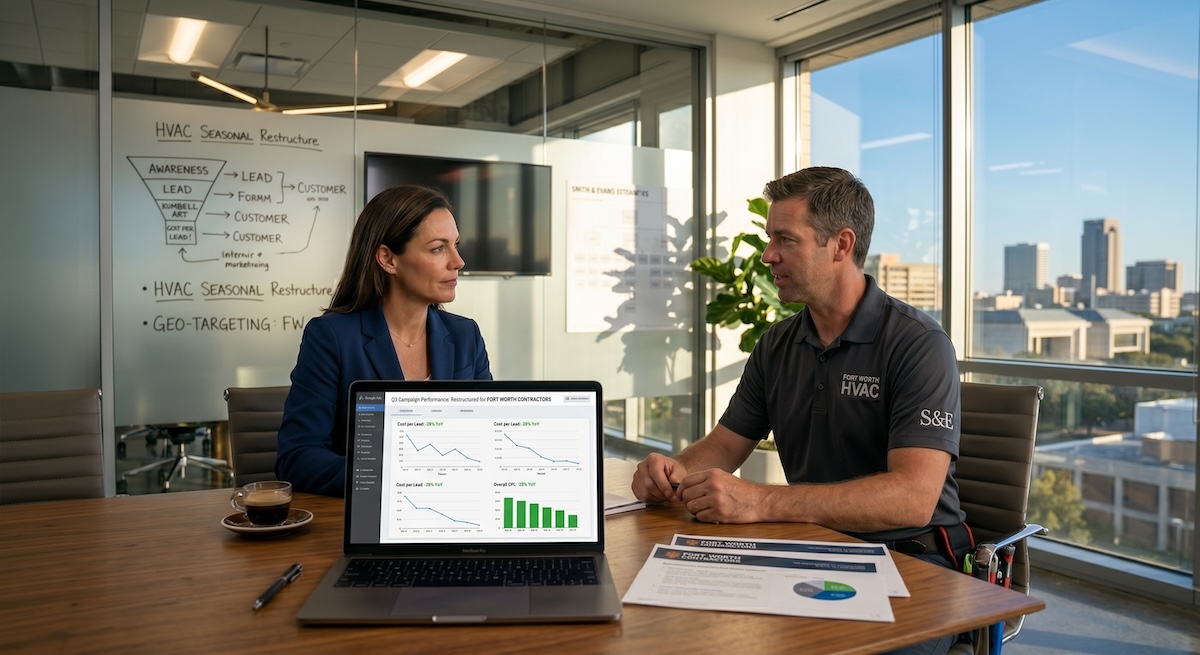
Three years ago, many Fort Worth business owners believed organic search was enough. Build a good website, publish content, and Google will reward you with free traffic. That was never completely true, and in 2026, it’s nearly impossible. Organic visibility requires months of effort with no guaranteed results. Meanwhile, a properly managed paid ads campaign delivers measurable traffic and leads within days.
The algorithm shift also matters. Google’s focus has moved from exact-match keyword performance to audience intent. This actually favors paid advertising. Instead of competing on keywords alone, you can now compete on audience behavior, interests, and past interactions. That shift makes paid ads more predictable and more profitable for businesses willing to invest. Organic strategies that relied on keyword density and backlink volume are stale. Paid strategies that focus on audience quality are ascendant.
Smart Fort Worth businesses aren’t abandoning organic entirely; they’re building a hybrid model. Paid ads generate immediate revenue. Organic content builds long-term authority. Together, they create a moat that’s difficult for competitors to cross. Businesses that choose only one strategy are already losing to businesses that master both.
Getting Started With Paid Ads: The Right Foundation
Many Fort Worth companies start paid advertising wrong. They set up a Google Ads account, bid on broad keywords, and watch their budget disappear into clicks that never convert. The problem isn’t paid ads themselves; it’s the lack of foundation. Before you spend a dollar, you need clarity on three things: who your ideal customer is, what they’re searching for, and what conversion means for your business.
A proper paid ads strategy starts with customer research and keyword mapping. What problems do Fort Worth customers have that your business solves? What language do they use when they search? How much is a customer worth to you? Once you answer these questions, you build a campaign structure that targets high-intent keywords, filters out poor-fit clicks, and connects search queries directly to your strongest business outcomes.
The foundation also requires landing page optimization. A visitor who clicks your ad and lands on your homepage is unlikely to convert. Visitors who click an ad and land on a page designed specifically for that search query convert at 3 to 5 times the rate. That’s why PHENYX designs both the ads and the landing pages they lead to. The integration between ad copy, audience targeting, and destination page design is what separates campaigns that lose money from campaigns that build sustainable growth. A paid ads campaign is only as strong as its landing page.
Common Questions
What’s the typical ROI on paid ads in Fort Worth?
ROI depends on your industry and profit margins, but well-managed paid advertising typically returns $3 to $5 for every dollar spent within the first 90 days. Service businesses, contractors, and professional services often see even higher returns. E-commerce and lower-margin retail see more variable results. The key is honest tracking. You must know exactly which clicks convert to customers, and which ones don’t. That data drives optimization, which drives better ROI over time.
How long before I see results from paid ads?
Paid advertising shows results immediately. You’ll see clicks and impressions within hours of launching a campaign. However, meaningful conversion data takes 2 to 4 weeks. You need sufficient volume to identify patterns and optimize. That’s why a three-month commitment is standard. Paid ads deliver speed, but they don’t deliver overnight miracles. Patience, combined with weekly optimization, produces the best results.
Should I hire an agency or manage paid ads myself?
Managing paid ads requires consistent attention to campaign metrics, audience behavior, and competitive changes. One misaligned keyword or targeting setting can waste thousands in budget. Many business owners lack the time or expertise to optimize effectively. Hiring an experienced agency like PHENYX lets you focus on serving customers while professionals monitor your campaigns 24/7, test variations, and adjust budgets based on performance. For most businesses, the cost of professional management pays for itself through better results.
Fort Worth businesses have a limited window to invest in paid advertising while costs remain favorable and competition is still developing. The market is shifting quickly. In six months or a year, the advantages available right now may have evaporated as every competitor realizes the opportunity. The businesses that win are the ones that act now, build authority early, and establish customer relationships before the market saturates.
Ready to build a paid ads strategy that works for your Fort Worth business? PHENYX specializes in paid advertising campaigns designed to reach your ideal customers at the exact moment they’re ready to buy. Contact PHENYX today for a free audit of your current visibility and a clear roadmap for growth.






%20(2).svg)
%20(1).svg)
