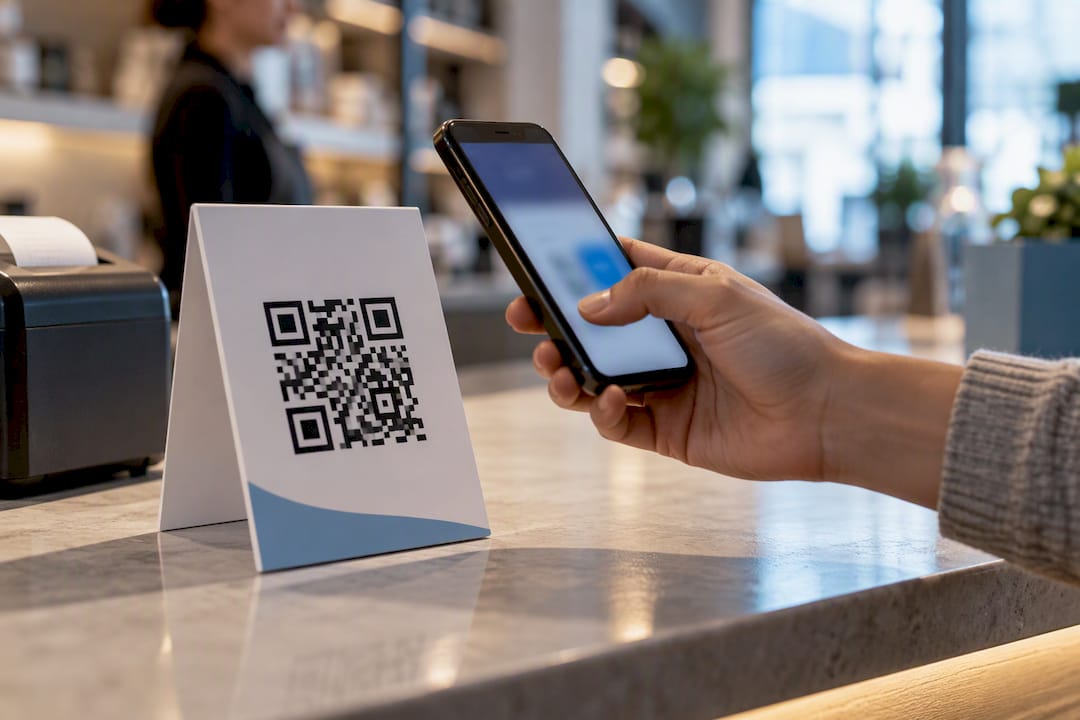

5 Step QR Code Marketing Checklist to Capture First Party Data
QR codes are one of the most reliable ways to turn a physical touchpoint into a measurable digital action, provided you build them correctly. The single rule that separates a successful campaign from a wasted print run: use dynamic, redirectable codes on a short branded domain, and test the final printed asset before it ever reaches a customer. Done right, QR codes deliver first-party data, clean attribution, and a trustworthy experience.
TL;DR:
- Using dynamic QR codes on short branded domains allows for editable links and precise tracking of scan data across different channels.
- Proper testing at final print size, on various substrates, and across multiple phone models ensures high scanability and a smooth user experience.
- Attaching campaign parameters and connecting scan data to CRM or analytics platforms helps measure actual conversions like signups or purchases.
- Security concerns require visible destination URLs and clear user consent, along with accessible alternatives for users with disabilities.
- Campaigns with clear objectives, linked to specific outcomes, benefit from structured planning, testing, and professional management to maximize ROI.
Table of Contents
- Quick summary: your QR launch checklist
- What a QR code is and when to use it in marketing
- Why QR codes matter now: first-party data and real intent
- Static vs. dynamic codes, redirects, and campaign parameters
- Design, placement, and testing best practices
- Turning scans into tracked outcomes
- Privacy, security, and accessibility requirements
- Real campaigns that map to measurable outcomes
- Your pre-launch implementation checklist
- When to build it yourself and when to bring in help
- How PHENYX helps you run measured QR campaigns
- Sources
- FAQ
Quick summary: your QR launch checklist
- Give every code one objective and one clear post-scan action.
- Use dynamic codes with short branded redirects so links stay editable and trackable.
- Test the code at final print size and material across common phone models.
- Show the destination URL in plain text and offer a non-scan alternative.
- Connect scans to your CRM or analytics platform to track scan-to-conversion.
What a QR code is and when to use it in marketing
A QR code is a machine-scannable pattern that typically resolves to a URL, opening a webpage, form, or app without the customer typing anything. Where a hyperlink handles a digital click, a QR code handles a physical scan, which is why it shines on packaging, in-store displays, event signage, and printed receipts.
It makes far less sense in an email or on a website, where a plain clickable link already does the job faster. Reserve QR codes for moments where a person is holding a physical object or standing in a physical place and needs a fast bridge to a mobile screen.
Why QR codes matter now: first-party data and real intent
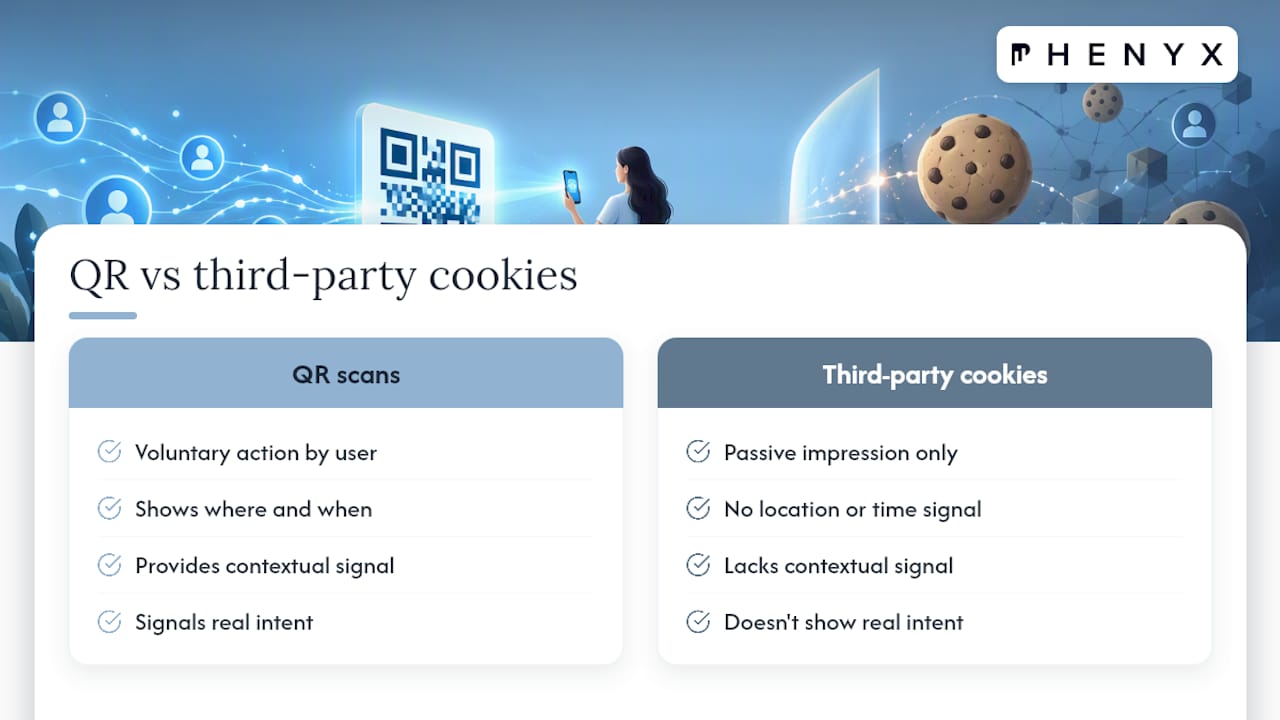
A scan is not a passive impression. It is a voluntary action that tells you where and when a person engaged, which gives marketers a contextual signal that anonymous cookies simply cannot replicate. That context, tied to a real moment of interest, is what makes QR-driven data genuinely useful rather than just abundant.
Smart marketers use that moment to build permissioned first-party data: an email opt-in at the point of purchase, a short progressive-profiling form after an event, or a quick feedback prompt on a receipt. Industry reporting frames QR scans as a strong first-party data source precisely because the person scanning has already shown intent. As third-party cookies keep fading, that kind of permissioned, contextual signal is becoming one of the more dependable ways to understand a customer.
Static vs. dynamic codes, redirects, and campaign parameters
Static codes bake the destination URL directly into the pattern. They never break, but they can never change either, and they give you no scan data. Dynamic codes point to a short redirect link that you control, so you can edit the destination after printing and see exactly how many people scanned.
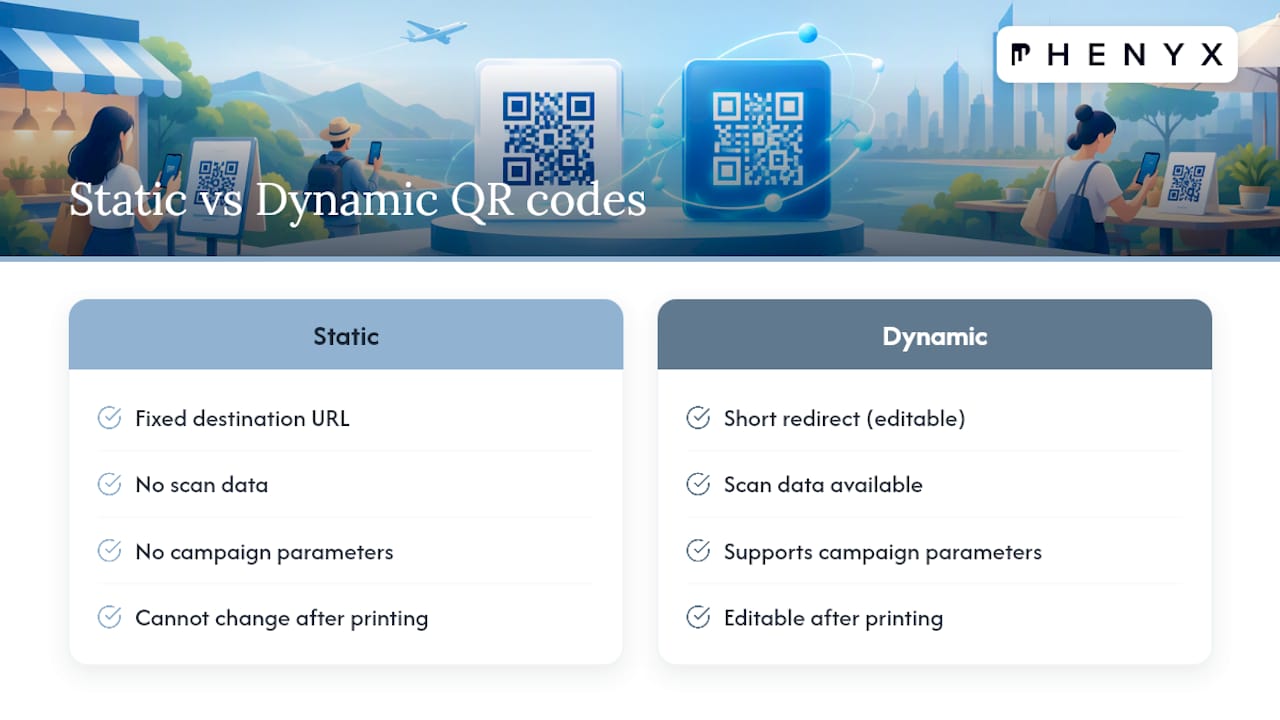
For any campaign you plan to measure, use a dynamic code on a short branded domain, with campaign parameters attached so scans show up correctly in your analytics. Branded domains also build trust, since customers are more likely to scan a code tied to a name they recognize than an unfamiliar shortened link.
Because dynamic codes depend on a redirect service, plan for what happens if that service goes down. A simple fallback, such as a backup landing page or a static mirror of the destination, keeps a scan from ever dead-ending during a live campaign.
Design, placement, and testing best practices
Size and contrast decide whether a code even scans. The Department of Energy’s QR code guidance recommends testing at final size, keeping the destination URL short, and printing that URL in plain text next to the code so people have a fallback if the scan fails.
Reflective finishes, fabric, and curved surfaces all distort the pattern and cause scan failures, so test on the actual substrate, not a flat proof. For events, outdoor signage, and packaging, place codes at a comfortable reading distance and away from glare, and keep a generous quiet zone of blank space around the pattern.
Before anything goes to print, run through a short test matrix:
- Scan the final-size, final-material proof with several different phone models.
- Check load time and confirm the destination page works on mobile data, not just Wi-Fi.
- Verify any form or coupon on the landing page actually functions end to end.
Pro Tip: Print one physical proof and test it in the exact lighting and material of its final location before approving the full run.
Turning scans into tracked outcomes
A useful workflow starts with a single objective: coupon redemption, event check-in, or a feedback form, then works backward. Create a separate dynamic code for each channel, attach UTM or campaign parameters to the redirect, and design one specific conversion event the scan should trigger.
Typical post-scan conversions include coupon redemption, newsletter signups, appointment bookings, and short NPS or feedback surveys. On the technical side, connect scan data to your analytics or CRM through tag manager events, webhooks, or a CRM API, similar to the conversion-tracking patterns used for paid ads. Watch scan volume, scan-to-conversion rate, and channel performance side by side so you can tell which physical placement is actually driving results.
Privacy, security, and accessibility requirements
The FTC has warned that scammers hide harmful links inside QR codes to steal personal information, and NIST has documented similar phishing campaigns sent through email and text. A branded domain and a visible destination URL let customers verify a code before they scan it.
A scan alone is not consent to market to someone, particularly when data is collected in a confidential context; get affirmative, clear consent before adding a scanner to a marketing list. On accessibility, ADA web guidance calls for keyboard access and proper labeling on any form a scan leads to, plus a non-scan alternative such as a printed phone number or written URL, an approach also detailed in third-party accessibility and SEO guidance.
Real campaigns that map to measurable outcomes
A QR code on a receipt that links straight to a reorder page removes friction from repeat purchases and gives you a clean signal of which customers came back. An event badge or table tent with a check-in code can capture email addresses and session attendance in one scan, feeding attendance data directly into your CRM.
On packaging, a QR code that opens a loyalty signup with progressive profiling asks for only an email at first, then requests more detail on later visits. Each of these works because the value exchange is obvious, the scan takes seconds, and the outcome is trackable from the first tap.
Your pre-launch implementation checklist
- Confirm the single objective and the exact post-scan conversion event.
- Generate a separate dynamic code for each channel and attach campaign parameters.
- Use a short branded redirect domain and set up a fallback path in case it goes down.
- Test the code at final size and on final substrate across multiple phone models.
- Confirm the landing page is accessible and offer a non-scan alternative nearby.
When to build it yourself and when to bring in help
Simple, one-off codes linking to a static page with a short measurement window are fine to build yourself. Campaigns spanning multiple channels, redirect infrastructure, and CRM integration are where a structured, tested approach pays off, which is the kind of execution PHENYX handles daily for clients.
— PHENYX
How PHENYX helps you run measured QR campaigns
Most businesses lose QR campaign value not at the print shop but in the gap between the scan and the report that never gets built. PHENYX plans, designs, and implements QR-driven campaigns across web, print, and video, then connects the scan data back to analytics and CRM so every campaign shows a real outcome, not just a scan count.
If you want that kind of managed execution across your marketing, our MODS subscription covers campaign strategy, design, and measurement under one in-house team, starting from $4,000 per month. Check out MODS to see how it fits your next campaign.
Sources
- Scammers hide harmful links in QR codes to steal your information | Consumer Advice
- QR Code Standards and Best Practices | Department of Energy
- ADA resources: Web guidance
- QR Codes: A powerful CTA for first-party data | Miami Herald
FAQ
What is the FBI warning about QR codes?
Federal agencies including the FTC have warned that scammers hide harmful links inside QR codes to steal personal information, often through tampered stickers placed over legitimate codes. The FTC advises inspecting the URL before entering any information and avoiding unsolicited codes in public places.
What is the downside of QR codes?
QR codes can fail to scan if they are printed too small, placed on a reflective or curved surface, or lack enough contrast against their background. They also raise security concerns, since a malicious code can redirect users to a phishing page, which is why testing and a visible destination URL matter.
Which companies are using QR codes for marketing?
Retail, event, and packaged goods brands widely use QR codes for loyalty signups, event check-ins, and reorder links tied to receipts. Reporting on QR-driven campaigns frames them as a reliable source of first-party data when the scan offers a clear benefit.
How to use QR code in advertising?
Use a dynamic QR code with a short branded redirect so you can track scans and edit the destination later, and attach campaign parameters to separate performance by channel. Design the code with a single objective, such as a discount landing page or a signup form, and test it at final print size before launch.
Do QR codes need an accessible alternative?
Yes, ADA guidance recommends offering a non-scan alternative, such as a printed URL or phone number, since not every customer can or will scan a code. Any form or page the code leads to should also support keyboard navigation and clear labels.
Recommended
- The Marketing Audit Checklist That Drives Real Results
- Beyond Clicks and Impressions: Elevating Your Marketing Game with Ad Tracking
- How to Prepare for a Quarterly Marketing Meeting and Set Your Brand Up for Success
- How to Prepare a Strong Marketing Campaign for 2026: Ideas and Tips Every Business Can Use