

Prove Value in 30 Days: Marketing Subscription Model for Marketers
A marketing subscription model is a recurring-payment structure where customers pay monthly or annually for ongoing access to a product, service, or managed deliverable instead of a one-time purchase. The primary payoff is predictable recurring revenue paired with deeper, longer customer relationships, since retention replaces repeat selling as the growth engine. What follows is a practical playbook for choosing a model, pricing it, and keeping subscribers engaged.
TL;DR:
- Building a billing system that supports proration, multiple payment methods, and usage metering is essential before scaling a subscription business.
- Tracking key metrics like monthly recurring revenue, churn rate, and cohort retention from launch ensures healthy growth and early problem detection.
- Offering a 30-day to 90-day onboarding period with clear milestones helps verify value delivery and reduces early churn risks.
- Implementing retention tactics such as pause options, personalized engagement, and automated payment retries significantly improve subscriber longevity.
- Starting with simple tiered pricing is recommended for most offers, with usage-based models added once billing infrastructure and metering are in place.
Table of Contents
- Quick Summary
- Practical Subscription Model Types and How to Pick One
- The Financial Case: KPIs to Model Before You Launch
- Step-by-Step Launch Playbook for Subscription Offers
- Retention Playbook: Engagement, Pauses, and Dunning
- Billing Logistics and the Minimum Tech Stack
- How a Managed Marketing Subscription Fills the Gap
- What Experienced Marketers Get Wrong About Pricing
- PHENYX MODS: A Managed Path to Recurring Marketing Results
- Sources
- FAQ
Quick Summary
- Start testing with tiered or usage-based pricing, since both map cleanly to most B2B and B2C marketing offers.
- Prioritize retention tactics first: structured onboarding, pause options instead of hard cancellations, and automated dunning for failed payments, as detailed in practical retention tactics.
- Build billing infrastructure that handles proration, multiple payment methods, and usage metering before you scale.
- Track MRR growth, churn rate, and cohort retention from the first day of launch, not after year one.
- Treat the first 30 days as the make-or-break window for proving value to a new subscriber.
- Consider a managed subscription when internal teams lack the bandwidth to run this consistently.
Practical Subscription Model Types and How to Pick One
Choosing the right model shape matters more than choosing the right price. According to Stripe’s guidance on subscription business models, subscription businesses succeed when they build measurable recurring value and continuous engagement, not simply by switching customers to a recurring bill.
- Tiered or feature-based plans work best when usage patterns are predictable and customer segments are clearly defined, such as a basic, pro, and enterprise structure for a marketing tool.
- Usage- or consumption-based pricing fits services where demand varies significantly, like ad spend management or email sends, so customers pay in proportion to what they use.
- Membership or community access succeeds when exclusivity and peer connection drive the purchase, common in professional communities or premium content clubs.
- Product subscription boxes depend heavily on logistics execution and tend to carry higher churn risk from shipping delays or product fatigue, so fulfillment reliability becomes a retention lever in itself.
- Freemium versus free trials split by intent: freemium works when the product has a strong viral loop and low marginal cost per user, while time-limited trials work better for services with a clear, fast time-to-value.
Most marketing offers do best starting with tiered pricing, since it is the easiest for customers to understand and the easiest for a business to forecast. Usage-based pricing can follow once you have billing infrastructure that supports metering, which Gartner notes is a core capability to weigh when evaluating recurring billing platforms.
The Financial Case: KPIs to Model Before You Launch
Before committing to a subscription structure, model the core numbers. Monthly recurring revenue (MRR) and annual recurring revenue (ARR) show the baseline you are building on, while average revenue per user (ARPU) shows whether your pricing tiers are balanced. Churn rate determines how fast that baseline leaks, and customer lifetime value (CLV) against customer acquisition cost (CAC) payback tells you whether the economics work at all.

Stripe explains that subscription models provide predictable revenue, simplify forecasting, and increase lifetime value by shifting from one-time sales to ongoing relationships. That predictability only holds if onboarding actually delivers value quickly: a common mistake is pricing a subscription around features the business wants to sell rather than the outcome the customer is paying for.
A useful rule of thumb is keeping CAC payback within a window your cash flow can tolerate, typically under twelve months for most small and midsize marketing offers. Businesses that skip this modeling tend to discover their unit economics are broken only after scaling the problem.
Step-by-Step Launch Playbook for Subscription Offers
Launching a marketing subscription works best as a sequence, not a single decision.
- Define the recurring value and activation metric. Identify the specific outcome a subscriber needs to experience quickly, the moment that makes them feel the subscription was worth it.
- Choose the subscription shape and draft pricing. Decide between tiered, usage-based, or hybrid pricing, and set tiers around clear usage or outcome thresholds.
- Map a 30 to 90 day onboarding flow. Build measurable milestones into the first three months so you can see exactly where new subscribers stall.
- Decide trials versus freemium, and set cancellation policy. Offer a pause option alongside cancellation rather than only a hard stop.
- Prepare acquisition channels and launch offers. Line up trial periods, limited-time pricing, or bundles to drive initial sign-ups before scaling spend.
Pro Tip: Treat your first 90 days of subscriber data as a diagnostic tool, not a victory lap: the drop-off points you find there usually repeat at scale if left unaddressed.
Stripe’s product documentation describes proration, trials, coupons, and automated adjustments as standard billing features worth building into this sequence from day one rather than retrofitting later.
Retention Playbook: Engagement, Pauses, and Dunning
Retention, not acquisition, has become the dominant subscription priority. According to Recurly’s 2025 industry report, acquisition rates dropped to 2.8% while pause and re-engagement strategies gained importance, a sign that keeping existing subscribers now outweighs chasing new ones.
Onboarding milestones matter because they predict churn early. A subscriber who never reaches a defined “first value” moment in month one is a churn risk long before their renewal date arrives.
- Build engagement loops around personalization, loyalty rewards, and small community touchpoints rather than generic newsletters.
- Offer pause options before cancellation, since Recurly’s retention data shows pause usage converting into measurable re-subscription revenue later.
- Automate dunning with smart payment retries to catch failed cards before they become silent cancellations.
Involuntary churn, meaning lost subscribers due to failed payments rather than active cancellation, is a measurable and fixable slice of total churn when billing systems handle retries well.
Billing Logistics and the Minimum Tech Stack
Running subscriptions reliably starts with billing infrastructure, not marketing creative. You need support for proration when customers upgrade or downgrade mid-cycle, multiple payment methods to reduce failed transactions, and usage metering if any part of your pricing is consumption-based.
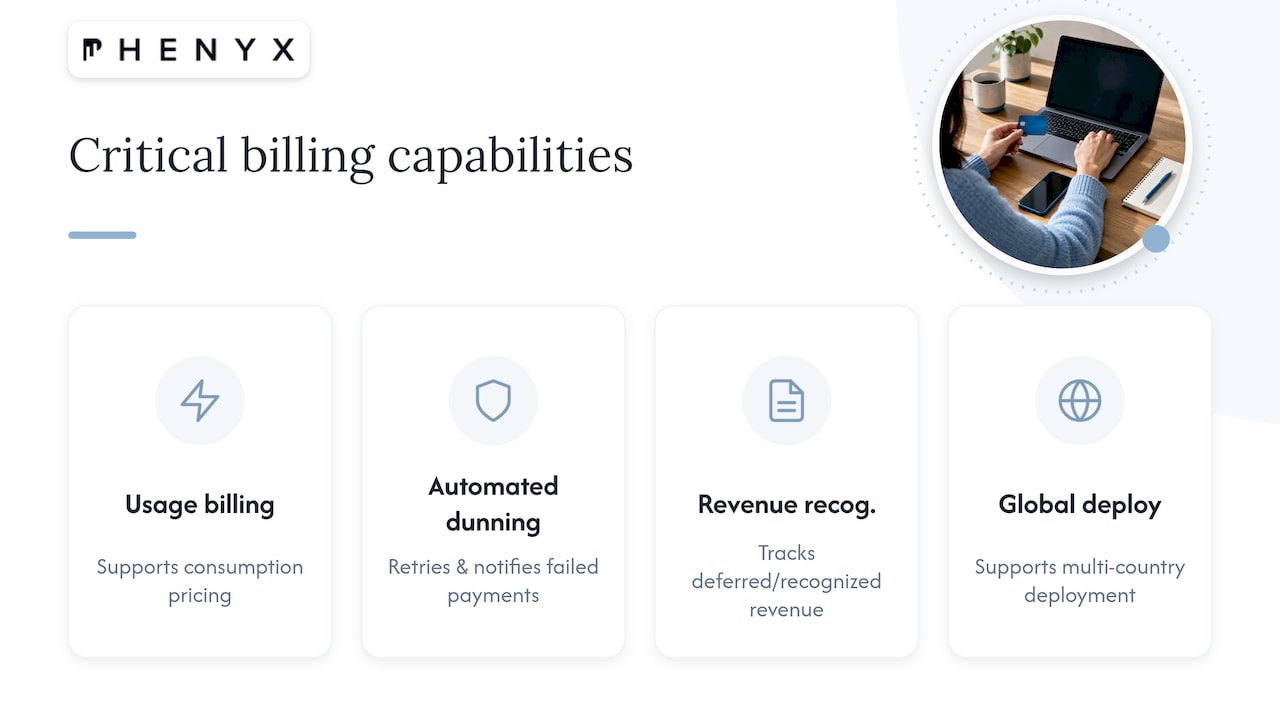
Gartner recommends evaluating recurring billing platforms by functional capability rather than vendor reputation alone, specifically usage billing, automated dunning, revenue recognition support, and the ability to deploy globally if your subscriber base expands beyond one country.
At minimum, build three dashboards before launch: one tracking MRR movements (new, expansion, contraction, churned), one isolating involuntary churn separately from voluntary cancellations, and one tracking reactivation rate among paused or lapsed subscribers. Without these, you are running a subscription business on guesswork about why revenue moved.
How a Managed Marketing Subscription Fills the Gap
Running this playbook well takes consistent creative output, ad management, SEO work, and reporting, month after month. A managed subscription service applies a structured approach to that ongoing work for businesses that would rather hire a team already built for it than assemble one internally, particularly smaller companies without a dedicated marketing department.
What Experienced Marketers Get Wrong About Pricing
Complex usage pricing feels sophisticated but often loses customers who cannot predict their bill. Simple tiers win more often than clever metering, and personalization has to scale through process, not manual effort, or the promise breaks the moment volume grows.
— PHENYX
PHENYX MODS: A Managed Path to Recurring Marketing Results
If building and maintaining a subscription marketing engine in-house stretches your team thin, a marketing on demand subscription can deliver ongoing SEO, paid ads, content, and design work under one in-house team instead of several vendors. It fits small and midsize businesses that want consistent monthly output without managing multiple contracts.
MODS starts from $4,000 per month. Visit Phenyx to see what is included.
Sources
- Retention tops trends in Recurly 2025 industry report
- Gartner Critical Capabilities: recurring billing applications
FAQ
What are the three main types of subscription models?
The three common structures are tiered or feature-based plans, usage-based or consumption pricing, and membership or community access models. Many businesses combine elements of more than one, such as a tiered base plan with usage-based add-ons.
Is a subscription model profitable?
A subscription model can be profitable when customer lifetime value clears acquisition cost within a reasonable payback window and retention stays strong. According to Stripe, the predictability of recurring revenue simplifies forecasting, but profitability depends on keeping churn low and onboarding effective.
Is Netflix a subscription model?
Yes, Netflix operates on a tiered subscription model where customers pay a recurring monthly fee for continued access to its content library. It is a widely recognized example of the membership and tiered-access structure discussed in subscription pricing.
What are the disadvantages of a subscription model?
Subscription models carry churn risk, since customers can cancel at any time, and involuntary churn from failed payments can quietly erode revenue if billing systems lack automated retries. They also require sustained value delivery every billing cycle, which demands more operational consistency than a one-time sale.
How much does a managed marketing subscription cost?
PHENYX’s MODS starts from $4,000 per month and includes ongoing marketing services delivered by an in-house team. Full details are available at Phenyx.