

SBA Lender Marketing: Get Qualified Applicants in 2–4 Weeks
Opt into Lender Match and configure your MySBA profile, fix a conversion focused landing page with webhook lead capture, and stand up referral partnerships with CDFIs, banks, and advisors. These three moves cover the channels that produce qualified applicants fastest, and each one feeds the others once your intake and follow-up process is running. Start with Lender Match, since it requires the least setup for the most immediate return.
TL;DR:
- Lender Match should be prioritized first because it offers qualified leads with low acquisition costs and requires minimal setup.
- Building a conversion-optimized landing page with clear loan type focus and webinar tracking enhances lead capture effectiveness across multiple channels.
- Referral partnerships with local CDFIs and advisors can generate better-fit borrowers, especially for community-focused lenders, with simple outreach and referral tracking.
- Content should target specific borrower questions and long-tail keywords to attract qualified search traffic and improve paid search ROI.
- Complying with CFPB rules involves early legal review of intake forms and clear consent, especially as reporting requirements phase in through 2026 and 2027.
Table of Contents
- Quick Summary: What to Do First
- Which Channels Actually Drive SBA Loan Prospects
- Registering and Optimizing on SBA Lender Match and MySBA
- Designing Landing Pages and Forms That Convert Borrowers
- Building Referral Pipelines With CDFIs, Banks, and Advisors
- Content, SEO, and Paid Media That Reach the Right Borrowers
- Compliance-Aware Intake: What Marketers Need to Know
- KPIs, Attribution, and Lead Routing Workflows
- How PHENYX Approaches SBA Lender Marketing
- Where Lenders Usually Get the Sequencing Wrong
- A Faster Path to Qualified SBA Leads
- Sources
- FAQ
Quick Summary: What to Do First
Marketing teams at SBA lending institutions can move on several fronts at once without overloading their staff. Use this checklist to sequence the work over the next two to four weeks.
- Request CAFS access and complete your MySBA Lender Portal setup.
- Configure your lender profile with accurate loan types, amount ranges, and industry filters.
- Add webhook lead capture to your primary landing page before running any paid traffic.
- Schedule outreach calls with two or three local CDFIs, SCORE chapters, or accountants.
- Draft three content pieces built around real borrower questions, not generic loan copy.
- Run a small paid search test to validate keyword intent before scaling spend.
- Confirm your compliance team has reviewed any new intake fields before launch.
A structured marketing audit can help prioritize these steps if your team is short on bandwidth.
Which Channels Actually Drive SBA Loan Prospects
Not every channel deserves equal budget. Lender Match delivers pre-qualified, high-intent borrowers at low acquisition cost, which makes it the obvious starting point for any lender regardless of size. Organic search and AEO content build a compounding asset that pays off over months rather than days. Paid search fills gaps quickly but costs more per lead and needs tight keyword control. Referral partners and local outreach produce fewer but often better-fit deals, especially for community-focused lenders.
Priorities shift with scale:
- Smaller lenders get the most traction from referral partnerships and a well-built landing page.
- Mid-size lenders should combine Lender Match with a modest paid search budget.
- Larger institutions can support all five channels at once, with content and AEO as the long-term compounding layer.
Registering and Optimizing on SBA Lender Match and MySBA
The enhanced Lender Match platform connects a large volume of monthly capital requests to participating lenders, so getting your profile right matters more than most marketers assume. Setup follows a fairly linear path, detailed in the CAFS Lender Match documentation:
- Request CAFS access through your institution’s designated administrator.
- Log into the MySBA Lender Portal and create your lender profile.
- Set your loan types, minimum and maximum amounts, and industry filters.
- Add your logo, contact details, a short description, and your application URL.
- Configure webhook or API integration so matched leads flow directly into your CRM.
Opt-in timing matters. Borrower requests are summarized roughly two business days after submission, and Lender Match functions as a referral tool rather than a loan application itself, according to the SBA’s own Lender Match page. Review each match’s basic profile before opting in, since a rushed opt-in on a poor fit wastes staff time on both sides.
Pro Tip: Treat every Lender Match referral like a warm inbound call. Respond within 24 to 48 hours, or the borrower will likely have already heard from a competing lender.
Designing Landing Pages and Forms That Convert Borrowers
Your landing page is where Lender Match traffic, paid clicks, and referral visits either turn into applications or bounce. Keep the loan types front and center: 7(a), CDC/504, and microloan, each with a plain-language line about who typically qualifies.
- Lead with a clear call to action, not a wall of eligibility rules.
- Limit required form fields to what you need to qualify a lead, and use progressive profiling for the rest.
- Capture consent for data use clearly at the point of submission.
- Add UTM parameters to every traffic source so you know what’s working.
- Test headline variants, trust badges, and CTA placement on a rolling basis.
Webhook lead capture should push form submissions straight into your CRM the moment they happen, not through a manual export. Mobile speed matters here too, since a large share of Lender Match referrals will open your page on a phone. Outside guidance on landing page structure covers the layout fundamentals worth testing against your own traffic.
Pro Tip: Add a short pre-qualification quiz above the fold. It filters unqualified traffic before it reaches your loan officers, saving hours of follow up on deals that were never going to close.
Building Referral Pipelines With CDFIs, Banks, and Advisors
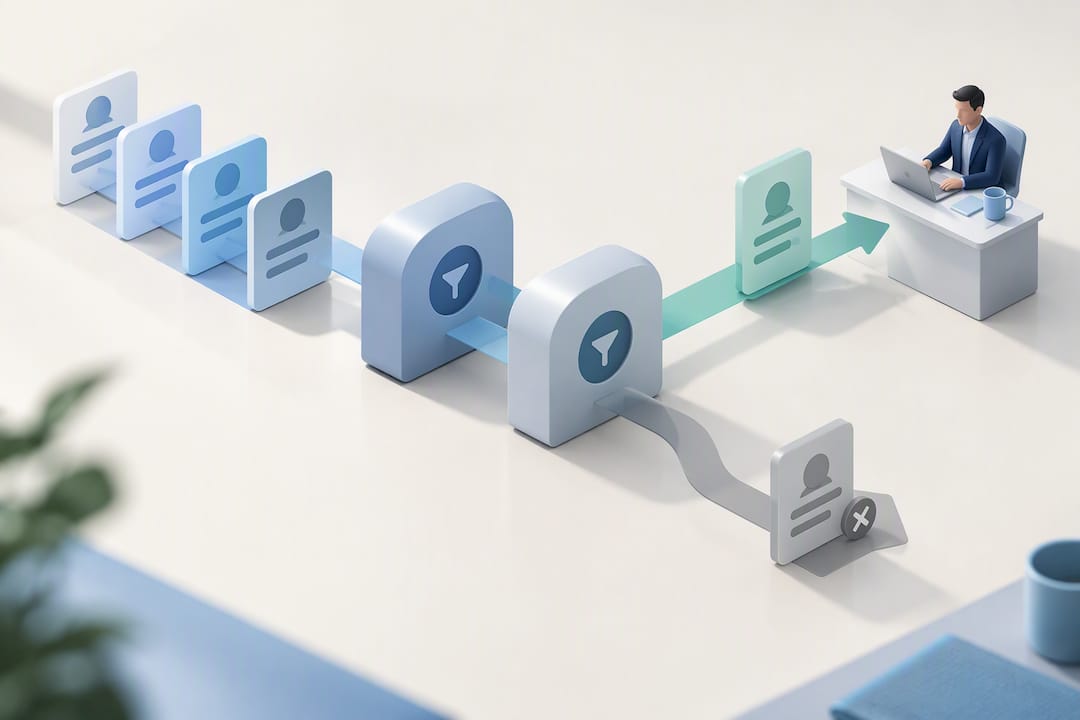
Referral partners often produce your best-fit borrowers, since they’ve already screened for basic viability. CDFIs, community lenders, SCORE chapters, small business development centers, and accountants all see loan-ready businesses before a bank does.
- Identify three to five local partners whose clients regularly need financing you offer.
- Send a short outreach email offering a co-branded flyer or a joint webinar, not a generic pitch.
- Set a simple referral SLA: response time, communication cadence, and how credit gets closed out.
- Track referrals in a shared spreadsheet or CRM tag until volume justifies a dedicated portal.
- Position your institution as a relationship-preserving partner, one that refers deals back when they don’t fit your box, according to commentary on the CFPB rule’s compliance shifts.
This approach to reaching borrowers before the bank conversation starts works particularly well for CDCs building 504 pipelines.
Content, SEO, and Paid Media That Reach the Right Borrowers
Borrowers search in specific, practical terms: “how much down payment for SBA loan,” “SBA loan for equipment financing,” “documents needed for 7(a) application.” Build content around those exact questions rather than broad loan overviews.
- Publish eligibility checklists tied to each loan type you offer.
- Write short use-of-proceeds stories that mirror real deal structures, without disclosing borrower details.
- Build industry-specific landing pages for sectors you fund often.
- Create “how to prepare” guides that walk applicants through documentation before they apply.
For paid search, test long-tail keywords tied to loan amount and purpose rather than broad terms like “business loans,” which draw expensive, unqualified clicks. Build a negative keyword list early to filter out personal loan and consumer credit searches. Remarketing to visitors who started but abandoned your application form tends to recover a meaningful share of otherwise lost leads. A 90-day lead generation framework covers how to sequence these tactics without overwhelming a small marketing team.
Compliance-Aware Intake: What Marketers Need to Know
The CFPB’s small business lending rule sets compliance date tiers based on origination volume, phased through 2026 and 2027, and covered institutions must collect and report specified small business lending data by those dates.
Institutions meeting the origination thresholds must begin collecting and reporting covered transaction data by the compliance dates set in the CFPB’s info sheet. This affects any marketing form that touches loan intake.
- Confirm which compliance tier applies to your institution before changing any intake form.
- Route new data fields through legal or compliance before launch, not after.
- Keep consent language visible at the point of collection, not buried in fine print.
- Loop in operations early so new leads route correctly once collection rules take effect.
KPIs, Attribution, and Lead Routing Workflows
Marketing effort only matters if it turns into funded loans, so track the full funnel rather than isolated metrics.
- Measure matches accepted, application start rate, and funded rate as your core funnel.
- Tag every lead source (Lender Match, paid search, organic, referral) with UTM or source fields in your CRM.
- Route form submissions through a webhook straight into CRM lead creation, tagged with eligibility criteria.
- Trigger automated email or text follow-up within minutes of submission, then hand off by SLA to loan officers.
Guidance on automating lead capture for advisors covers similar webhook and CRM patterns worth adapting for lending intake specifically.
How PHENYX Approaches SBA Lender Marketing
PHENYX builds the pieces this playbook requires under one roof: website design for conversion-focused landing pages, SEO & AEO services for borrower-language content, and paid ads and PPC management alongside webhook and CRM integration. A structured intake process, rather than any single proprietary tool, is what makes these pieces work together. Agencies tend to add the most value on complex integrations, sustained landing page testing, and coordinating multiple channels at once, work that’s hard for a lean internal team to sustain alongside daily loan operations.
Where Lenders Usually Get the Sequencing Wrong
The biggest mistake we see is collecting too much data too early, before a form has proven it converts. The second is weak follow up: a great landing page means nothing if a lead sits for three days. A 90-day rollout that starts with Lender Match and one landing page fix beats a six-month plan that tries to launch every channel at once.
— PHENYX
A Faster Path to Qualified SBA Leads
Building the technical and content pieces in this playbook takes time most marketing teams at lending institutions don’t have to spare. PHENYX offers a free SEO & AEO audit for SBA lenders and CDCs, reviewing your current landing pages, content, and search visibility against the tactics above.
The audit maps out where your Lender Match integration, landing page conversion, and content gaps stand today, then outlines a 90-day plan to close them. Request your audit through the SBA landing page to get a clear starting point instead of guessing where to spend next.
Sources
- CAFS LENDER MATCH PDF
- Lender Match - Small Business Administration
- Small Business Lending Rule: Compliance Date Info Sheet
FAQ
How much do SBA loan brokers make?
Broker compensation varies by deal size, structure, and lender agreement, and no single published figure applies across the industry. Lenders should check their own commission agreements and applicable SBA rules on fee disclosure rather than rely on a general estimate.
How do I market myself as a loan officer?
Build a visible presence around the specific loan types you specialize in, using content that answers real borrower questions rather than generic promotion. Referral relationships with CDFIs, SCORE chapters, and accountants tend to produce steadier volume than paid advertising alone.
Who is the largest SBA lender?
SBA does not publish a single definitive ranking of the largest lender by volume in a way this article can confirm, and figures shift by fiscal year and loan program. Check the SBA’s own Lender Match page for the current list of nearly 1,000 participating lenders in the program.
How do I attract loan customers?
Combine a fast, mobile-friendly landing page with active participation in SBA Lender Match, then layer in referral partnerships with local CDFIs and advisors. Consistent follow up within 24 to 48 hours of a lead matters as much as the channel that produced it.
What is the CFPB small business lending rule and does it affect marketing?
The rule requires covered lenders to collect and report specified data on small business loan applications, phased in through 2026 and 2027 based on origination volume, according to the CFPB’s compliance date info sheet. Any marketing form tied to loan intake should be reviewed by compliance before launch to confirm it meets the applicable tier’s requirements.