


Marketing Agency Hiring: Set KPIs, Prep Your Brief, Check Access
Hire a marketing agency when your growth goals outpace what your internal team can execute, or when your measured marketing performance (ROI, lead volume, conversion rate) has stalled despite specialist effort. The U.S. Small Business Administration advises weighing marketing costs against the revenue they generate, while Gartner’s CMO research points to measurable objectives as the real test. We built our own practice, PHENYX, around that same readiness logic.
Phenyx
Bring Your Marketing Under One Roof
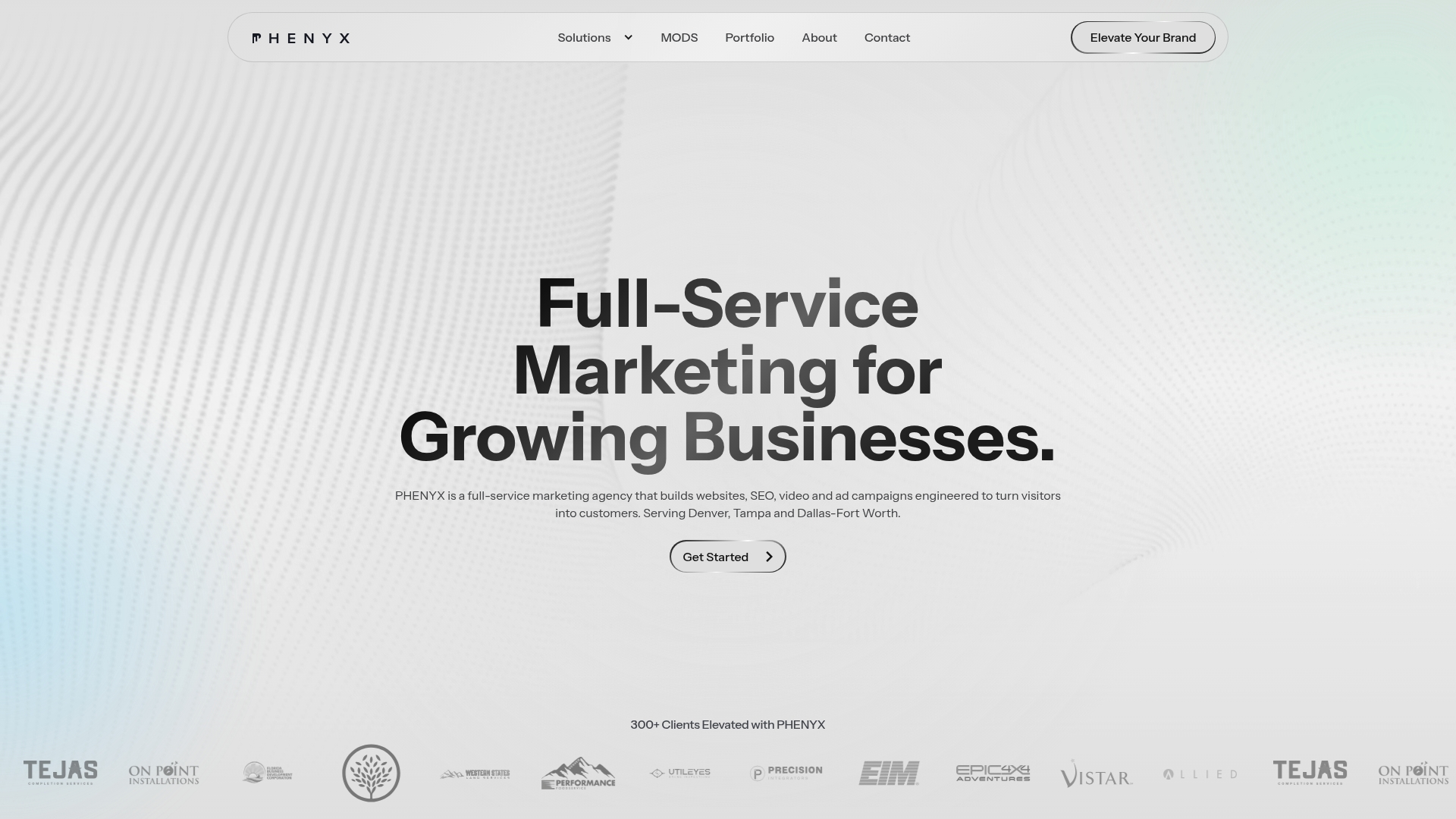
PHENYX brings web design, SEO, video production, and branding together to support consistent marketing and improve online visibility.
Explore PHENYX's marketing services
Table of Contents
Quick summary
If growth has flattened, your return on ad spend looks thin, or your team is stretched across too many channels, an agency conversation is worth having now. The signs below help you confirm it quickly.
Signs it’s time to hire a marketing agency
Most businesses do not wake up one day and decide to hire an agency. The decision usually follows a pattern of smaller frustrations that add up. Here is what to check for each one.
Budget context matters here too. Gartner’s 2025 CMO Spend Survey put marketing budgets at 7.7% of company revenue, with many leaders reporting they lack enough budget to execute their strategy. If that describes your own numbers, the fix usually is not more spend. It is matching the spend you already have to the right execution partner.
Readiness checklist: what to prepare before contacting agencies
A productive first call with any agency depends on what you bring to it. The SBA’s marketing-plan guidance lists the core elements worth having ready before you reach out.
Agencies need that access early because without it, the first month of any engagement becomes guesswork rather than strategy. Gartner’s spend data shows paid media at 30.6% of marketing budgets and digital channels making up 61% of total spend, which is exactly why separating agency fees from media costs matters when you’re comparing proposals.
Decide upfront whether you want a pilot project or a full retainer. A pilot tests fit on a narrow deliverable; a retainer assumes ongoing execution across channels.
Pro Tip: Score your own readiness on a one-page checklist (goals, budget, access, timeline) before your first agency call. Gaps you find there are gaps the agency will ask about anyway.
How to choose the right agency
Start with the outcome you need, not the services on an agency’s menu. Once you know whether you need more leads, better conversion, or faster scale, match the scope and pricing model to that outcome rather than the reverse.
When you talk to a shortlist, ask who will execute day to day, what milestones to expect early in the engagement, whether they can share a sample report, what access they require, and what the exit terms look like if the relationship ends. A simple scorecard rating outcome fit, measurement rigor, cost transparency, and reference quality makes comparing proposals far easier than relying on gut feel. Gartner’s research notes that 39% of CMOs planned to reduce agency budgets in 2025, often because the original scope and outcomes were never pinned down clearly.
Pro Tip: Ask for a 30 to 90 day pilot with specific deliverables before signing a longer retainer. It protects both sides and gives you real data instead of promises.
When to wait and short-term alternatives
Hiring an agency too early can waste money. If you have not found product-market fit, have no basic analytics tracking in place, or cannot describe your offer in one sentence, fix that first. An agency can accelerate a working engine, but it cannot build the engine for you.
Even a short-term engagement deserves the same KPI discipline. Track the same numbers you would track with a full agency relationship, so you have real data when you are ready to scale up.
PHENYX perspective: what we ask for and how we approach early engagements
We run website design, SEO and AEO, branding, video production, and paid ads under one in-house team, which keeps messaging consistent and turnaround fast. At first contact, we ask for a brief, your current KPIs, and access to analytics and ad accounts, the same groundwork outlined above. Our agency versus in-house breakdown and performance scorecard guide cover this in more depth.

Our take on the readiness question
Most advice on this topic treats “hiring an agency” as a single binary decision: ready or not ready. That framing undersells the real skill, which is sequencing. The businesses that get the most value from an outside team are not the ones with the biggest budgets. They are the ones who show up with a one-page brief, honest numbers, and a clear sense of which specific gap they are trying to close.

Conventional advice also overweights the vetting call and underweights the preparation that happens before it. An agency can only diagnose what you hand them. A vague “help us grow” brief gets a vague proposal back; a brief that names the channel, the number, and the timeline gets a plan you can actually hold someone accountable to.
If you take one thing from this guide, prioritize the readiness checklist over the agency shortlist. Get your brief and your access sorted first. The conversation that follows will be shorter, sharper, and far more useful.
How PHENYX can help and next steps
We built PHENYX as a full-service, in-house agency specifically so a clear brief turns into measurable outcomes without the back-and-forth of managing separate vendors for design, SEO, and content.
If you have your goals, budget range, and access ready, the next move is a discovery conversation. A few places to start:
Bring your one-page brief to the first call. It is the fastest way to get a proposal that actually matches what you need.
FAQ
What is the 3-3-3 rule for marketing?
Definitions of this rule vary across marketing sources, and no single authoritative version applies universally. Rather than relying on a specific formula, focus on the readiness signals and KPI tracking covered in this guide when deciding whether to bring in outside help.
Is it worth it to hire a marketing agency?
It is worth it when your growth goals exceed your internal team’s execution capacity or when your return on marketing spend has stalled, according to SBA guidance on comparing marketing costs with the revenue they generate. A study of creative teams found 64% bring in outside specialists for skills their own team lacks.
What is the 40-40-20 rule in marketing?
This rule is commonly cited in direct marketing circles as a way to weigh audience, offer, and creative in a campaign’s success, though no government or industry source in our research confirms a single standard definition. Treat it as a rough prioritization heuristic rather than a measured benchmark.
What is the 70/20/10 rule in marketing?
This is generally described as a budget allocation guideline, with the majority going to proven channels, a portion to emerging channels, and a smaller share to experimental ideas. Definitions vary by source, so use your own KPI data, not a fixed ratio, to set your actual budget split.
How long does it take to go from first contact to a launched campaign?
Timelines vary by project scope, but a typical path includes an initial brief review, a discovery call, a proposal, and a pilot period before a full campaign launches. Preparing your brief, KPIs, and account access in advance, as outlined in the readiness checklist above, is the biggest factor in shortening that timeline.

